Toy Safety for Toddlers: Age Labels, Choking & Wear
How do I check if a toy is safe for my toddler’s age and developmental stage?
Start with the age label on the package, then match the toy to your toddler’s real abilities—how they move, explore with their mouth, and handle small parts. A toy that’s “for ages 3+” isn’t just about skill; it often signals choking hazards, stronger magnets, longer cords, or pieces that can break under toddler-level chewing and dropping.
1) Confirm the age grade and safety labeling
Look for a clear age recommendation and basic manufacturer details. Avoid toys that don’t list a brand, contact information, or safety warnings. If it’s battery-powered, check for a secured battery compartment that requires a tool (like a screwdriver) to open.
2) Do a fast choking-hazard check
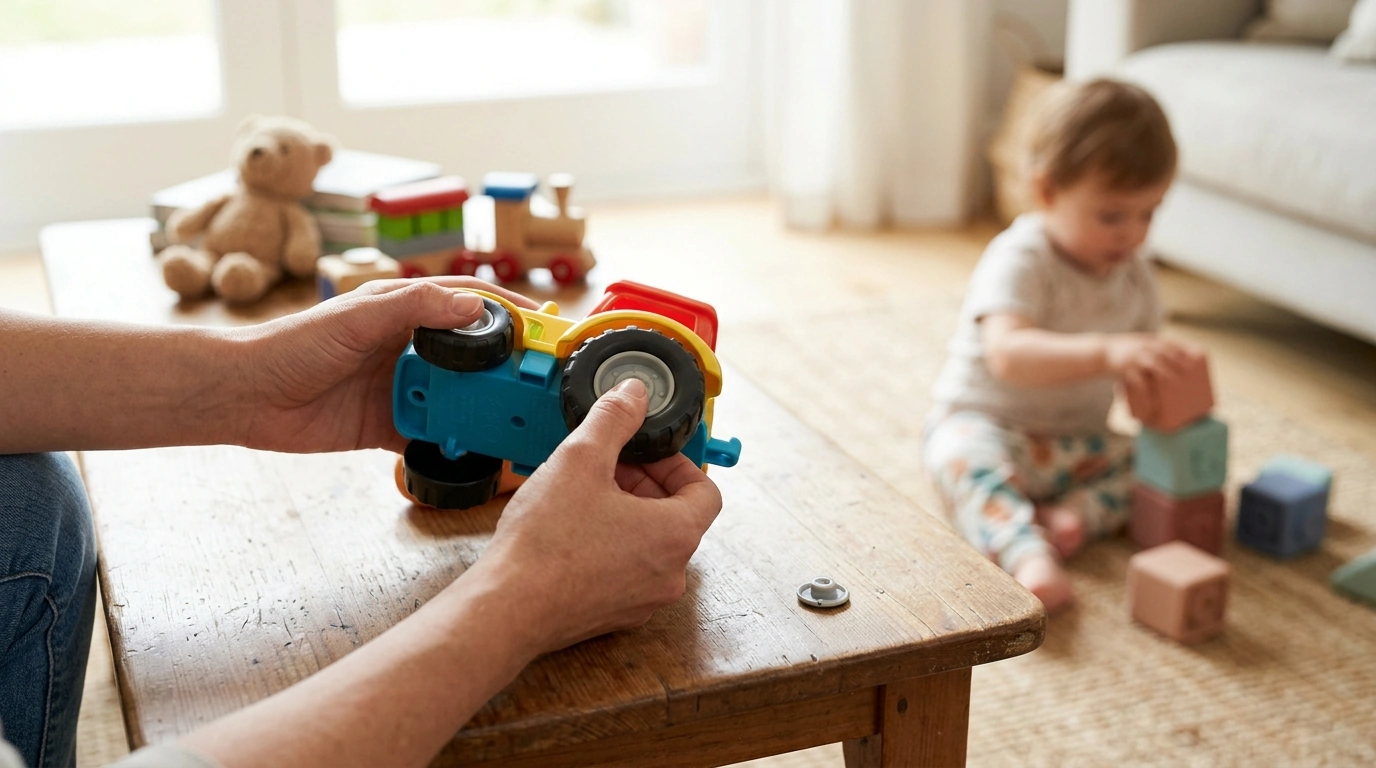
For toddlers who still mouth objects, avoid toys with small detachable parts (buttons, eyes, beads, mini accessories). Tug on anything glued, stitched, or snapped on; if it loosens with a firm pull, it’s not toddler-ready. Also watch for balls or round pieces that could block the airway.
3) Inspect for sharp edges, pinch points, and breakability
Run your fingers along seams and edges for rough spots. Squeeze and flex plastic parts to see if they crack. For ride-on or push toys, check wheel covers and hinge areas that could pinch fingers.
4) Match the toy to your toddler’s developmental stage
Choose toys that challenge without overwhelming: large-piece stacking, simple shape sorters, chunky puzzles, and sturdy pretend-play items. If your child is climbing, throwing, or very strong for their age, prioritize extra-durable designs and avoid delicate construction sets intended for older kids.
5) Re-check safety after a few uses
Even a safe toy can become unsafe once it’s worn. Routinely look for cracked plastic, loose screws, frayed strings, or exposed stuffing.
For a deeper, step-by-step checklist, visit the full guide on toy safety for toddlers.
FAQ
What toy features are biggest choking risks for toddlers?
Small detachable pieces, weakly attached decorations, and round parts that can lodge in the throat are the most common risks. If a piece can come off with pulling, twisting, or chewing, it’s safer to skip it.














Leave a comment