Fine Motor Milestones by Age: 1 to 5 Years
What fine motor milestones should I expect at ages 1, 2, 3, 4, and 5?
Fine motor skills are the small, precise movements kids use to grasp, pinch, draw, and handle everyday objects. Development varies, but these age-based milestones can help you recognize typical progress and decide when to ask for extra support.
Age 1 (12–18 months)
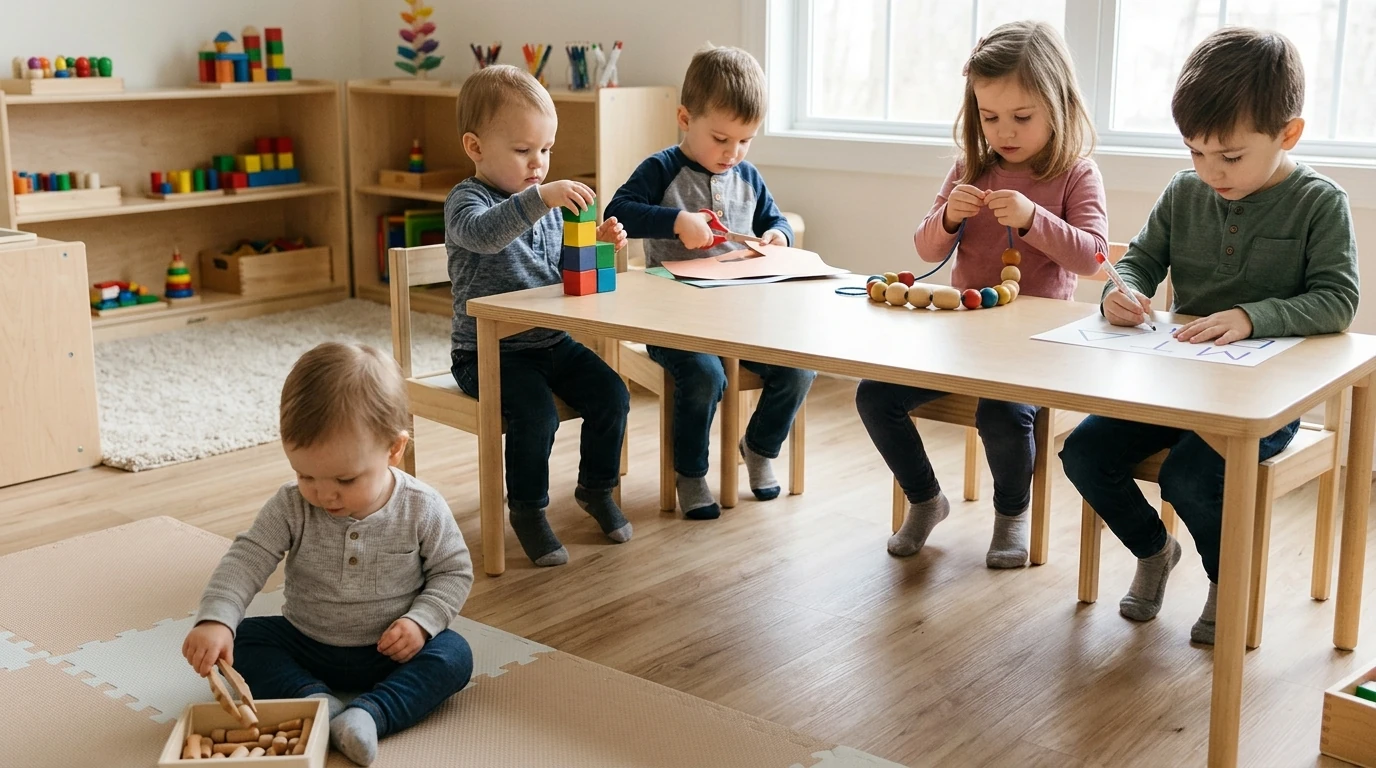
Many 1-year-olds can pick up tiny items using a pincer grasp (thumb and fingertip), point with an index finger, and stack 2–3 blocks. You may also see attempts to scribble with a crayon, turn pages (often several at once), and start using a spoon with lots of spills.
Age 2
At 2, kids often build taller block towers (about 4–6 blocks), make clearer scribbles, and begin copying simple lines. They may turn single pages more consistently, use a spoon with improved control, and start trying child-safe scissors (snipping is more common than cutting).
Age 3
By 3, many children can copy a circle, string large beads, and manipulate small toys (simple latches, chunky buttons, or connecting pieces). They may draw with more intention, begin holding crayons with a more mature grip, and use a fork with less mess.
Age 4
Four-year-olds frequently copy a cross and may start copying some letters. Scissor use improves (cutting along a line with help), coloring stays more within boundaries, and dressing skills expand—zipping, larger buttons, and managing fasteners with less assistance.
Age 5
At 5, kids often show stronger hand strength and coordination for writing their name, drawing recognizable people/shapes, and cutting out basic shapes. They may tie a simple knot or begin shoelace tying steps, use smaller buttons, and handle classroom tools (pencils, glue sticks) with greater endurance.
For a deeper breakdown and supportive activity ideas, visit the main guide: What fine motor milestones should I expect at ages 1–5?.
FAQ
What are easy fine motor activities I can do at home?
Try playdough pinching/rolling, sticker peeling, bead threading, clothespin games, and drawing or coloring on vertical surfaces (like easels) to build hand strength and control.














Leave a comment