Edible Ink Printer vs Edible Image Printer: Key Difference
What’s the difference between an edible ink printer and an edible image printer?
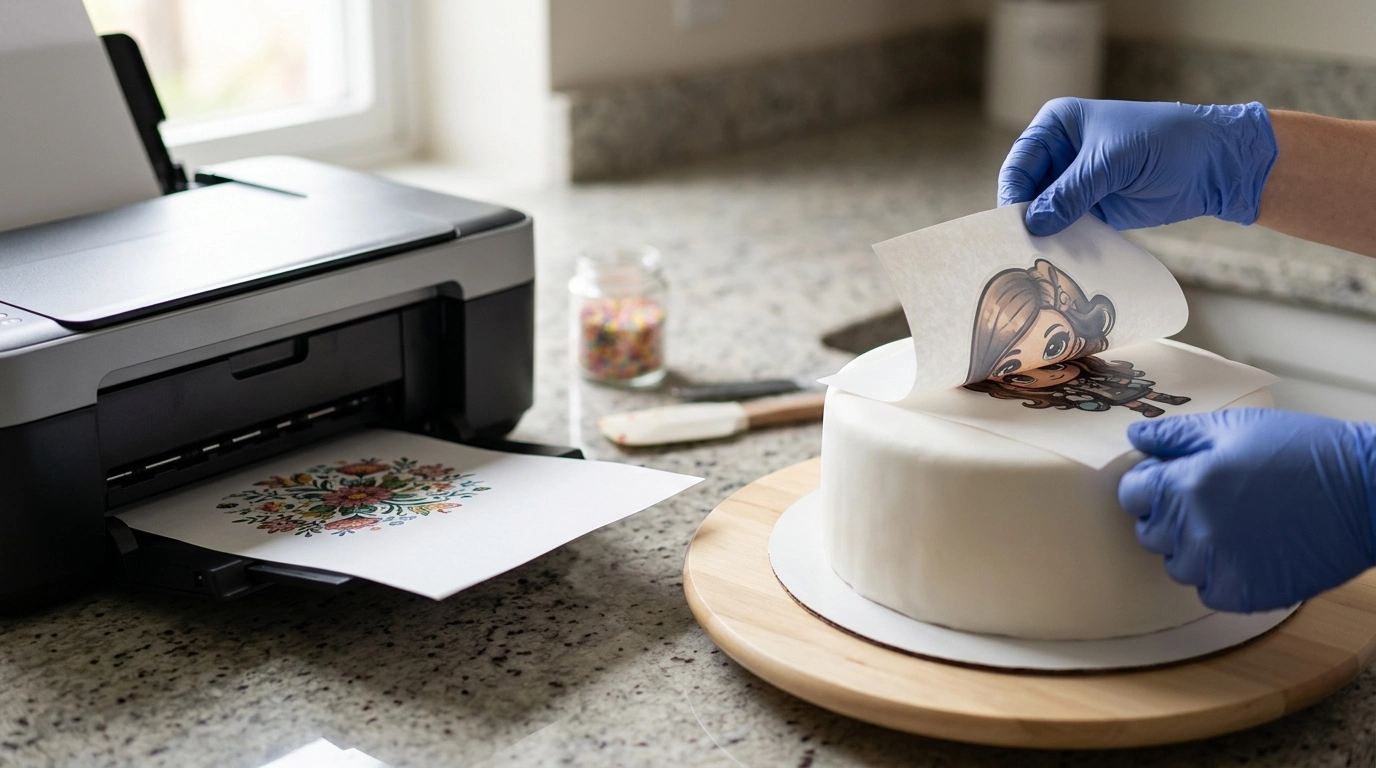
An edible ink printer is the hardware: a printer (usually a modified inkjet model) dedicated to printing with food-safe inks onto edible-friendly sheets. An edible image printer is the end result (and often the full setup): the edible picture you place on a cake or cookie, created by printing a design onto an edible sheet using edible ink.
Edible ink printer: the machine + edible ink system
When people say “edible ink printer,” they’re typically talking about the actual printer that’s been set aside for food use and loaded with edible ink cartridges. The focus is on the equipment—what prints, how it’s maintained, and what inks it accepts. Because edible inks are formulated differently than standard inks, the printer is treated like a dedicated food tool, not a shared office printer.
Edible image printer: the edible print you apply to desserts
“Edible image printer” is a common shorthand for “the printer used to make edible images,” but in everyday use it often points to the edible image itself: a printed logo, photo, or pattern on frosting sheets or wafer paper. If someone says they “need an edible image printer for cupcakes,” they usually mean they want the ability to produce edible images that can be peeled and placed on icing, fondant, or other finishes.
What actually matters when choosing between the terms
The practical decision is less about the wording and more about the complete workflow: edible ink + compatible edible paper (frosting sheets or wafer paper) + a dedicated printer + proper storage and handling. For a step-by-step breakdown of inks, papers, and setup tips, see this guide to edible ink printing for cakes, cookies, and coffee foam.
FAQ
Can any printer be used as an edible printer?
No. Only certain inkjet printers are suitable, and even then they must be dedicated to edible use and filled with edible ink; a printer that has ever used regular ink shouldn’t be converted for food printing.














Leave a comment