Clean & Deodorize an Aluminum Car Trash Can Safely
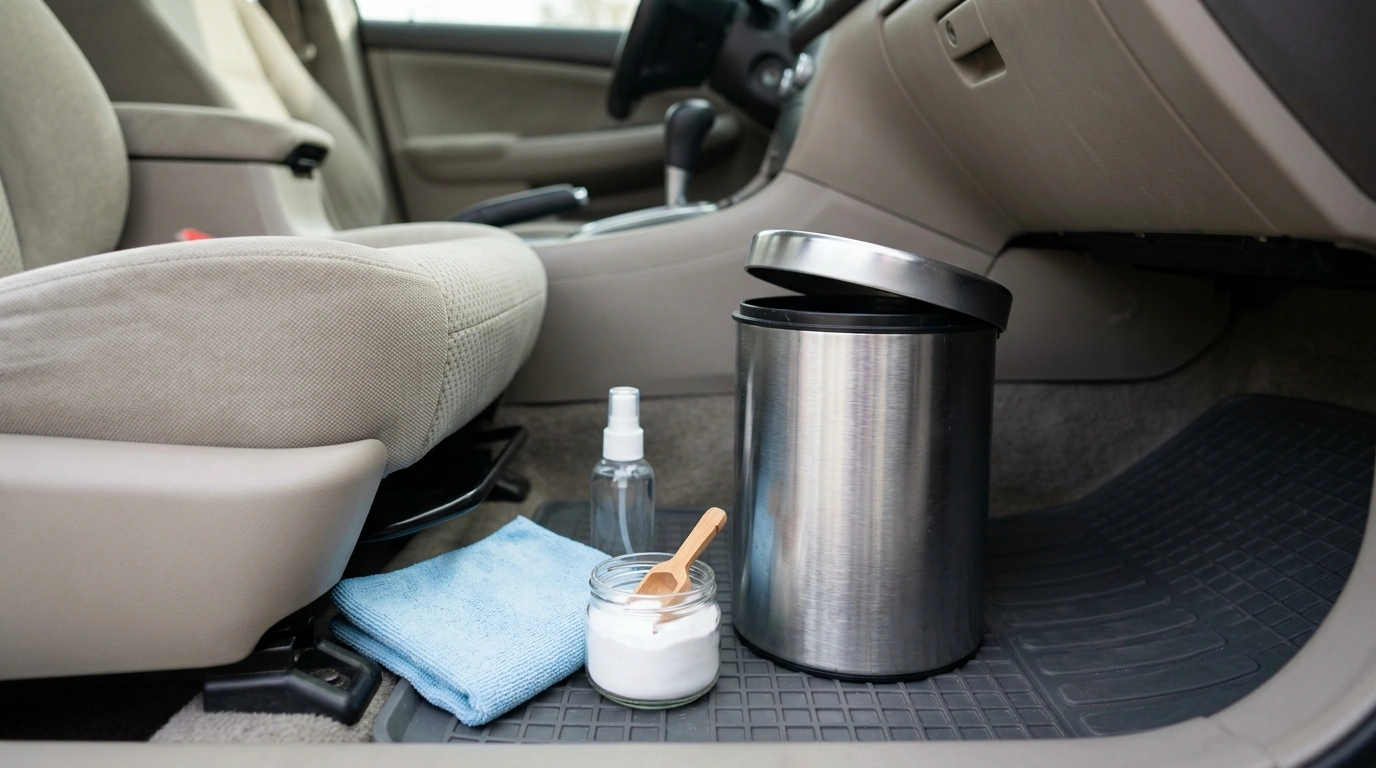
How do you clean and deodorize an aluminum car trash can safely?
Aluminum is durable, but it can spot, pit, or lose its finish if you use harsh cleaners. A safe routine uses mild soap, soft tools, and odor absorbers that won’t react with the metal.
Step 1: Empty, rinse, and remove the liner
Dump contents, remove any inner bin or liner, and rinse the can with warm water. If there’s sticky residue, let warm water sit in the bottom for a minute to soften it before wiping.
Step 2: Wash with gentle soap
Use a few drops of mild dish soap in warm water and a microfiber cloth or non-abrasive sponge. Wipe the interior and lid (including seams and the rim where odors collect), then rinse well so soap film doesn’t trap smells.
Step 3: Degrease stubborn grime without damaging aluminum
For oily buildup, use a small amount of baking soda paste (baking soda + water) and rub lightly with a soft cloth. Avoid steel wool, scouring pads, bleach, and strong alkaline oven cleaners, which can discolor or corrode aluminum.
Step 4: Deodorize safely
Dry the can first, then sprinkle a thin layer of baking soda inside and leave it for a few hours or overnight before shaking it out. For ongoing odor control, place a little baking soda in a breathable sachet or use an activated charcoal deodorizer puck (kept dry and secured so it won’t spill).
Step 5: Dry completely to prevent lingering smells
Wipe dry with a clean towel and leave the lid open for airflow. Moisture trapped under a lid is a common reason odors return quickly.
For more detailed tips and upkeep suggestions, visit the full guide on cleaning and deodorizing an aluminum car trash can safely.
FAQ
How often should you clean a car trash can to prevent odors?
Lightly wipe it weekly and do a full wash whenever there’s a spill or food waste. If you drive daily, a quick rinse and dry every 1–2 weeks keeps smells from settling in.















Leave a comment