Can You Use Any Printer for Edible Printing?
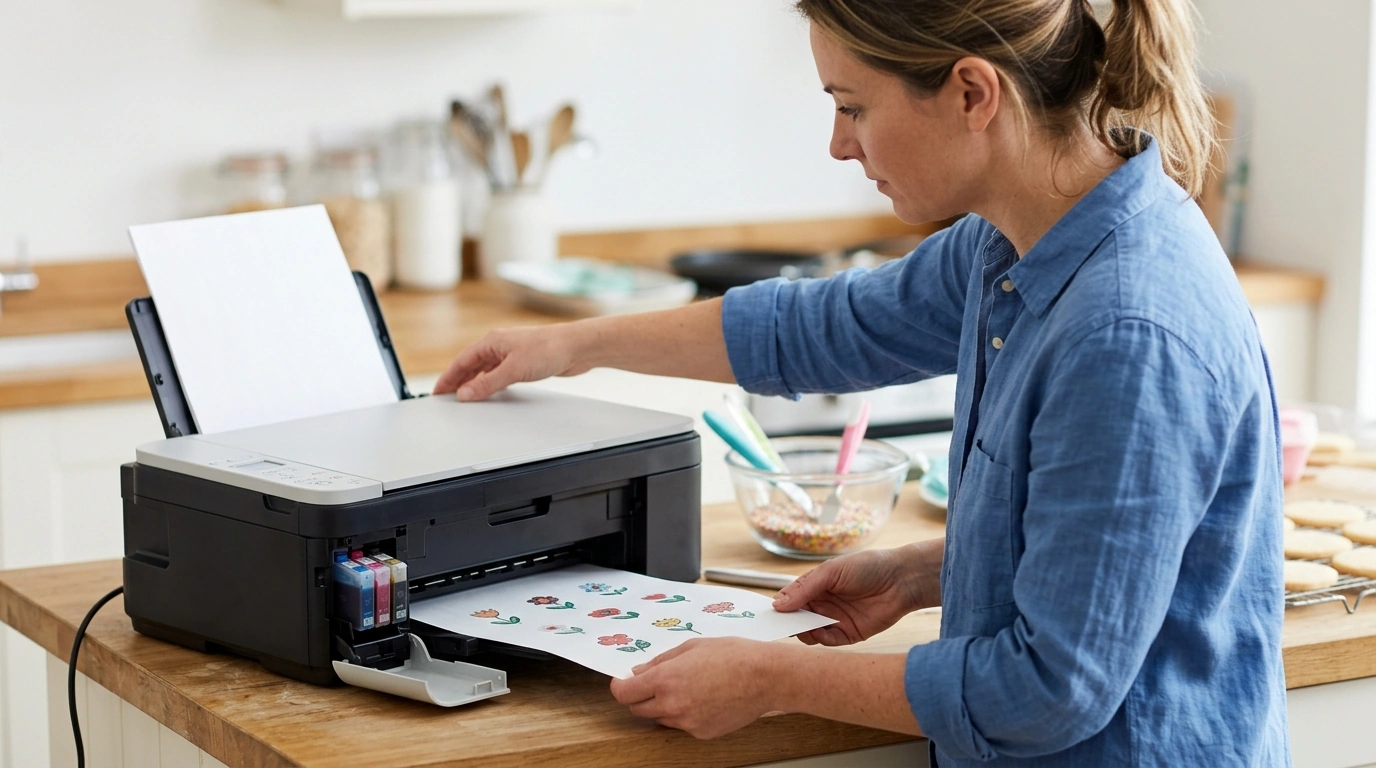
Can any printer be used as an edible printer?
Answer
No—most standard home and office printers can’t be used as edible printers as-is. An “edible printer” is typically a compatible inkjet printer that’s been dedicated to food use and loaded with edible ink cartridges designed for printing on frosting sheets, wafer paper, or similar edible media.
The biggest issue is ink. Regular printer ink (dye or pigment) is not food-safe, and even small traces left in the ink lines, print head, or rollers can contaminate edible prints. That’s why an edible setup should be either a new printer or a printer that has never used non-edible ink. Once a printer has run standard ink, it’s generally not recommended to convert it for edible use.
Printer type also matters. Edible printing is most commonly done with inkjet printers because they can spray liquid edible ink accurately onto edible sheets. Laser printers use toner powder and heat-fusing components, which are not intended for edible media and aren’t suitable for edible ink.
Even among inkjets, not every model is a good match. Edible sheets are thicker and can be more delicate than regular paper, so a printer needs reliable rear-feed or straight-through feeding to reduce smudging, jamming, or cracking of frosting sheets. Many bakers choose models known to work well with edible inks because they handle sheet thickness and color output more consistently.
For practical guidance on picking a compatible printer, edible inks, and sheets—and how to get clean, vibrant results—see the full guide here: Edible Ink Printing for Cakes, Cookies, and Coffee Foam.
For Can You Use Any Printer for Edible Printing?, the best answer depends on fit, material, care instructions, and how the product will be used day to day.
FAQ
What edible paper works best for cakes: frosting sheets or wafer paper?
Frosting sheets are usually best for cakes because they’re flexible, produce richer colors, and blend well onto buttercream or fondant. Wafer paper is sturdier and great for toppers and lightweight decorations, but it can look more matte and can curl with moisture.












Leave a comment