Nike Real vs Fake: Quick Checklist to Spot Authentic Gear
Your Quick-Check Checklist to Spot Real Nike Gear
Counterfeit Nike shoes and apparel can look convincing in photos and even in hand. A fast, repeatable checklist helps catch common tells before money changes hands—whether buying online, secondhand, or from an unfamiliar marketplace. The goal isn’t to find one “magic” giveaway, but to stack multiple small checks until the item either clears comfortably or raises enough flags to walk away.
Start With the Seller and the Deal
Before inspecting stitching or tags, evaluate where the item is coming from. A risky seller plus a too-good-to-be-true deal often predicts problems, even if the product photos look solid.
- Prefer authorized retailers or well-known resale platforms with authentication and clear buyer protection. You can confirm official locations using Nike’s Store Locator.
- Treat steep discounts on “new with box” hype releases as a risk signal, not a bargain.
- Check seller history: consistent reviews, detailed listings, and real photos of the actual item (not stock images).
- Look for complete documentation: original receipt, order confirmation, or provenance from a reputable platform—helpful but not foolproof.
- Avoid pressure tactics (limited-time claims, rushed payment off-platform, refusal to provide extra photos).
Box, Label, and Paperwork Checks (Fast Wins)
Packaging is one of the quickest places to catch inconsistencies. Many counterfeits stumble on formatting, print clarity, and mismatched codes.
- Match the box label to the item: style/SKU, color code, and size should align with the product inside.
- Inspect label print quality: clean edges, consistent fonts, and no smudging or pixelation on barcodes/QR codes.
- Verify the style code (SKU) format and compare it to trusted references (brand site listings, reputable retailers, or established sneaker databases).
- Check size runs and region codes: mismatched size conversions or odd formatting can be a red flag.
- Assess packaging quality: tissue paper, inserts, and overall box construction should feel sturdy and consistent—counterfeits often cut corners.
Quick box-label checklist (what to match)
| Check | What to look for | Red flags |
|---|---|---|
| Style/SKU code | Same code on box label and inside shoe tag | Codes don’t match; code missing; odd spacing |
| Color description | Matches actual colors/materials | Colorway name doesn’t fit the product |
| Barcode/QR print | Sharp, high-contrast, scannable | Blurry printing; crooked alignment; easy-to-scratch ink |
| Size formatting | Consistent US/UK/EU/CM conversions | Strange conversions; inconsistent spacing or fonts |
| Box quality | Firm cardboard, clean corners, even glue lines | Flimsy box; messy glue; warped lid |
Material, Stitching, and Build Quality (Hands-On Test)
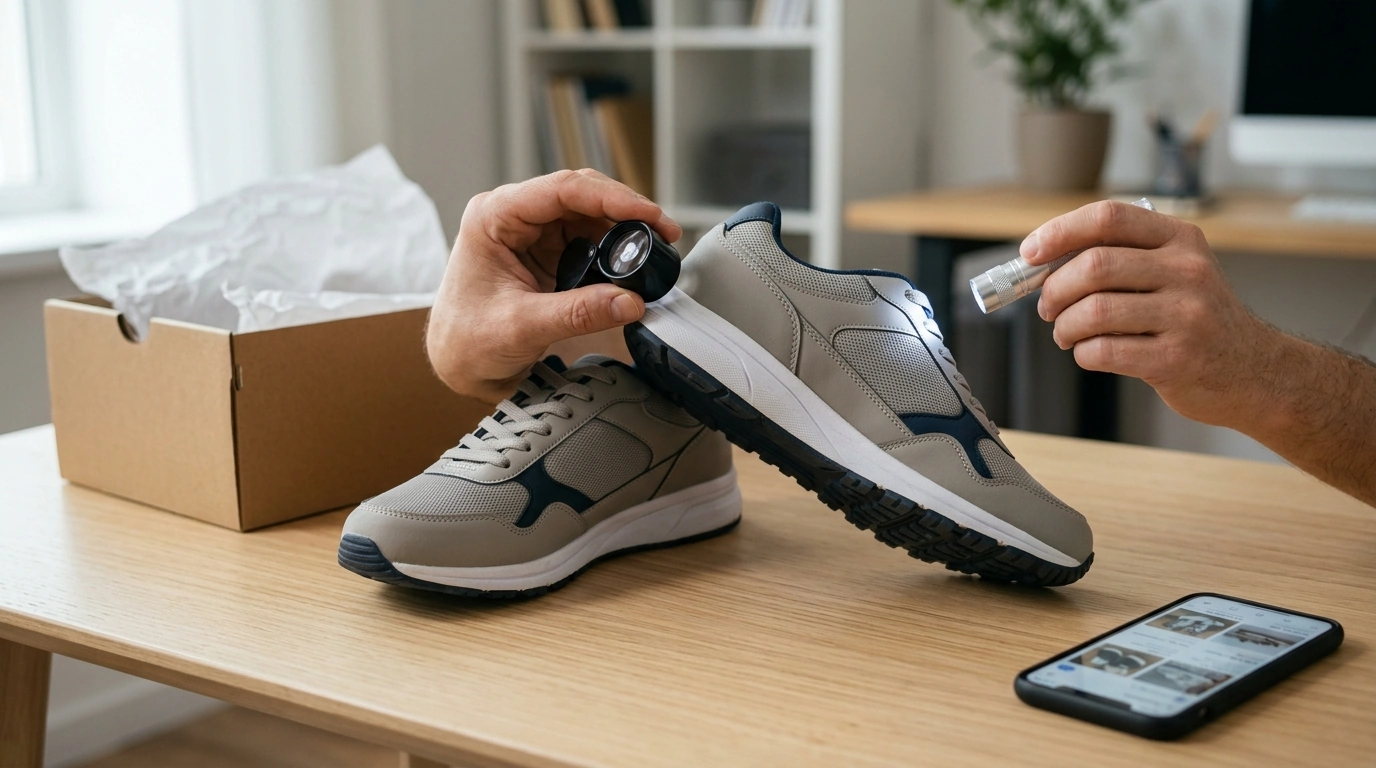
Once the listing and label checks pass, the fastest “in-hand” validation comes from build quality. Counterfeits often look okay at a glance, but break down when you inspect alignment, seams, and bonding.
- Run a seam check: stitching should be evenly spaced, with no loose threads or skipped stitches in high-stress areas.
- Feel the materials: many counterfeits use thinner mesh, overly glossy synthetic leather, or stiff foam that doesn’t rebound well.
- Check symmetry: left/right shoes should mirror each other closely in panel placement, swoosh shape, and toe box height.
- Inspect glue work: small glue traces can happen, but heavy glue stains, tackiness, or uneven bonding is a common counterfeit sign.
- Smell test: harsh chemical odor can indicate cheaper adhesives/materials (not definitive alone).
Logos, Fonts, and Details That Fakes Often Miss
Branding details tend to reveal the “almost right” mistakes: slightly off swoosh placement, fuzzy embroidery edges, or odd spacing in type.
- Swoosh consistency: check curvature, thickness, and placement relative to stitching lines and panels.
- Embroidery and heat-transfer marks: edges should be crisp; lettering should not bleed, fray, or look fuzzy.
- Compare typography: Nike branding uses consistent fonts and spacing; counterfeits often have subtle kerning and weight differences.
- Look at small details: lace tips, tongue tag, heel tab, and insole printing—fakes frequently get one of these wrong.
- For apparel: verify wash tags, fabric composition text, and stitching at hems/collars for clean finishing.
Inside Tags, Serial Numbers, and Manufacturing Codes
Tags can be copied, but they still matter—especially when you compare them to the box label and to each other.
Outsole, Insole, and Comfort Clues
Photo Checklist for Online Purchases
When to Walk Away (Decision Triggers)
For broader context on why counterfeits are risky beyond just “getting scammed,” see U.S. Customs and Border Protection guidance on counterfeit goods.
Quick-Check Checklist (Printable Summary)
Recommended Digital Guides (In Stock)
- Your Quick-Check Checklist to Spot Real Nike Gear – Ultimate Nike Fake vs Real Concern Guide (Digital download)
- Recovering from Burnout – A Practical Ebook Guide | Burnout Recovery Plan Step by Step for Energy, Focus, and Balance
- Unlock Deep Sleep and Lasting Calm | Stress Relief Sleep Guide, Digital eBook for Anxiety, Nighttime Relaxation & Restorative Sleep
FAQ
How to check if Nike shoes are real or fake?
Start with the seller and deal quality, then match the box SKU to the inside size tag. Next, inspect stitching and materials, confirm logo and font details, and compare outsole/insole patterns to known authentic references—using multiple checks instead of relying on one sign.
Do fake Nikes look real?
Some high-quality counterfeits can look close in photos, but they often fail on consistency when examined up close. Common slip-ups include tag/label formatting, stitching precision, material feel, and small finishing details like tongue tags and insole printing.
Are Nike shoes made in Vietnam original or fake?
Vietnam is a common legitimate manufacturing country for Nike, so “Made in Vietnam” alone doesn’t indicate a fake. Authenticity depends on the full set of checks—seller reliability, SKU/tag alignment, build quality, and consistent branding details.















Leave a comment