Keep Kids Busy and Calm on Moving Day: Easy Plan
How can I keep kids busy and calm on moving day?
Moving day can feel loud and unpredictable to kids, so the goal is to add structure, familiar comforts, and a few “job” moments that make them feel included without getting underfoot. Start by setting expectations the night before: explain the timeline in simple steps (breakfast, helpers arrive, lunch, new house), and show them where they’ll be during the busiest hours.
Create a “kids command center”
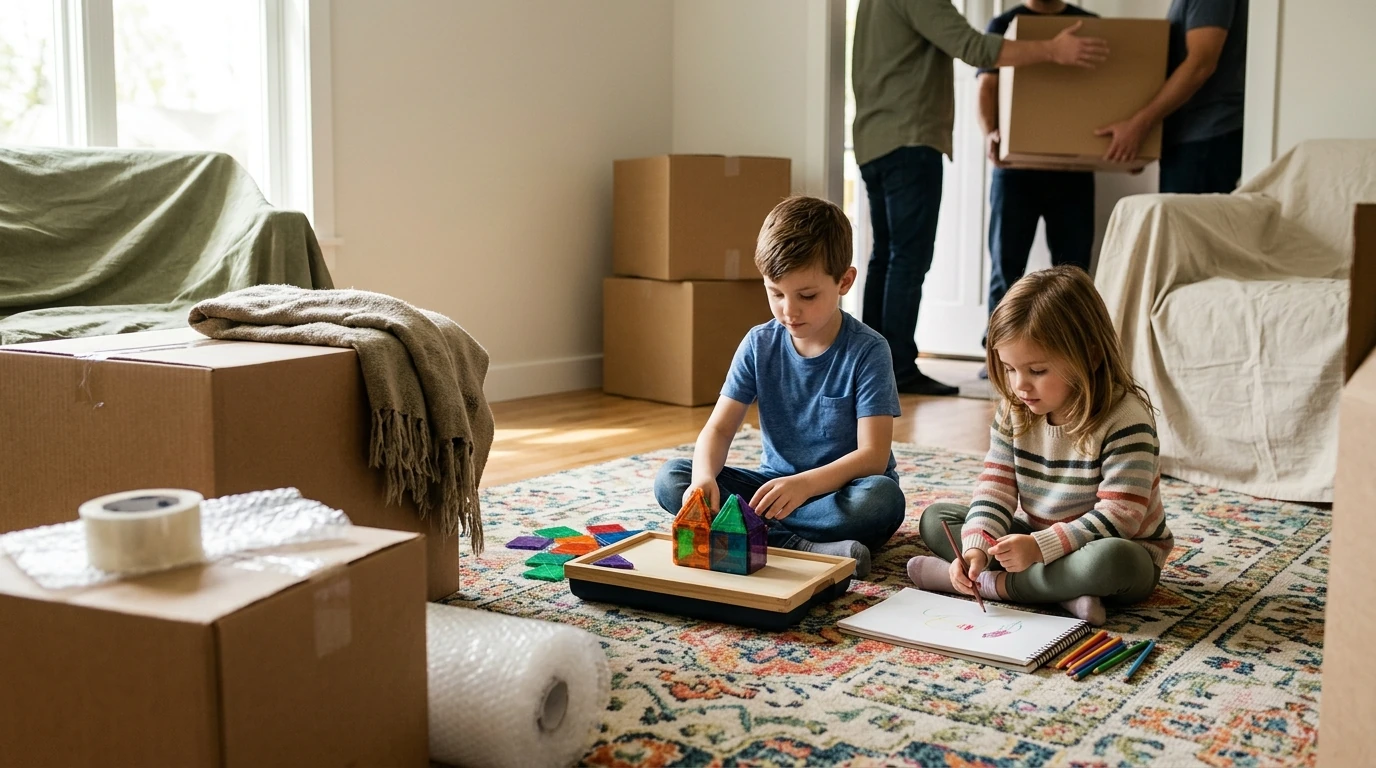
Pack one clearly labeled bag or bin that stays with you—not on the truck. Include snacks, refillable water bottles, wipes, a small first-aid kit, chargers, and a couple of comfort items (blanket, stuffed animal). Add quiet activities like sticker books, coloring supplies, magnetic tiles, and headphones for audiobooks.
Use a predictable schedule with mini check-ins
Kids stay calmer when they know what’s next. Offer short time blocks: “20 minutes of drawing, then a snack,” or “one episode, then bathroom break.” Set phone timers so transitions feel neutral and consistent rather than sudden.
Give them safe, helpful jobs
Assign tasks that are contained and age-appropriate: putting pillows in one box, taping “Kid Box” labels, counting boxes, or holding a checklist. Praise effort and completion, not speed. Avoid roles that require being near movers or heavy items.
Plan for peak chaos
If possible, arrange childcare for the heaviest loading/unloading window. If that’s not an option, designate one room or a shaded outdoor spot as a no-moving zone, and keep it stocked with activities and snacks. Protect nap times for toddlers whenever you can; overtired kids escalate quickly.
Keep emotions regulated
Bring familiar meals, keep hydration steady, and expect big feelings. A quick “feelings break” can help: five deep breaths, a hug, and a choice between two activities. For more step-by-step ideas and packing suggestions, visit the main guide here.
FAQ
What should I pack in an essentials bag for kids on moving day?
Include snacks, water, wipes, a change of clothes, comfort items, basic meds, chargers, and a few quiet activities like coloring or sticker books. Keep it with you so it doesn’t end up on the truck.















Leave a comment