Toddler Fine Motor Activities (1–2) With Household Items
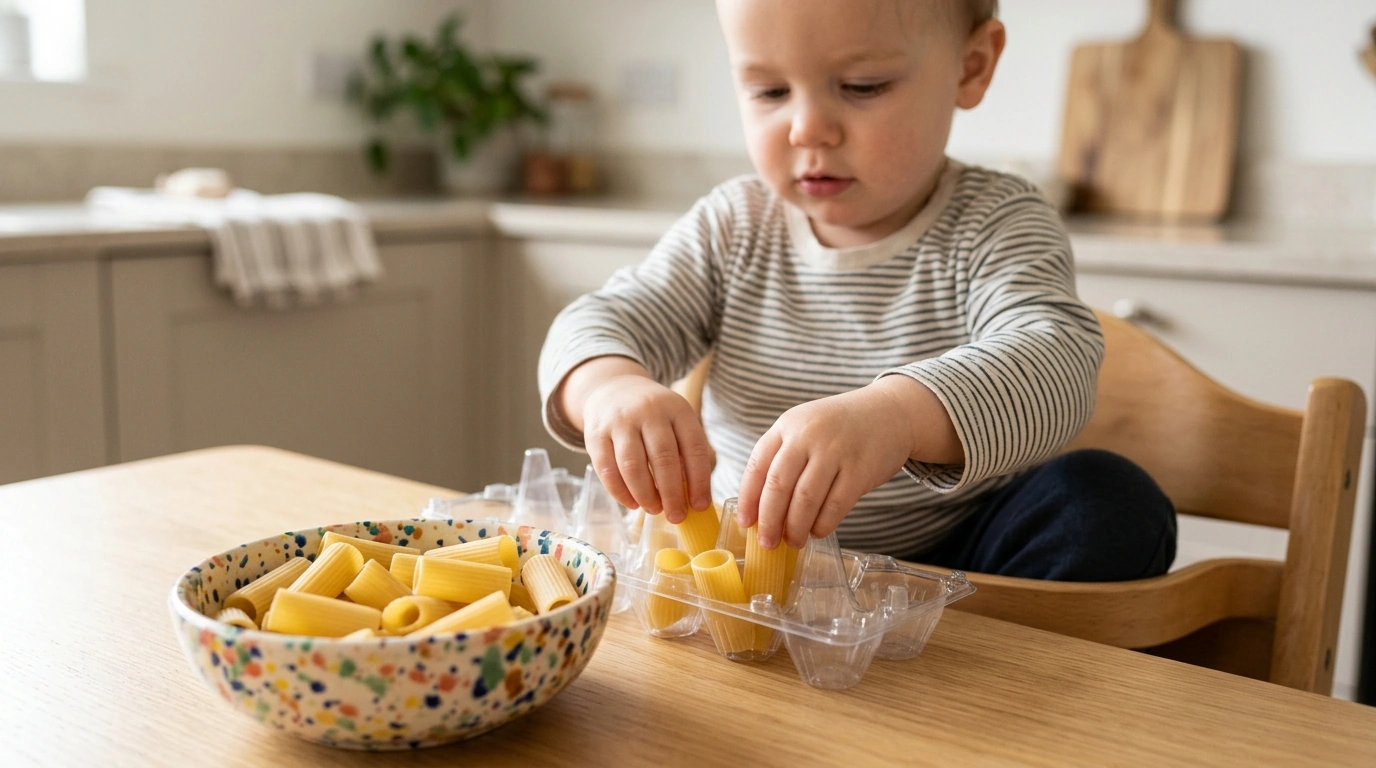
What are the best fine motor activities for toddlers (ages 1–2) using everyday household items?
At ages 1–2, the best fine motor activities are simple, short, and hands-on—built around grasping, pinching, transferring, twisting, and poking. Everyday items like tape, clothespins, lids, sponges, and cardboard can keep little hands busy while supporting early coordination. Choose one activity at a time, stay close for supervision, and stop if anything becomes a mouthing hazard.
Easy fine motor activities using household items
1) Pom-pom or cotton ball “drop”
Cut a hole in a plastic lid or the top of a cardboard box. Let your toddler drop cotton balls or large pom-poms in, then open it and dump them out to repeat.
2) Painter’s tape peel-and-stick
Place short strips of painter’s tape on a table edge. Toddlers practice pincer grasp by peeling them off and pressing them onto paper.
3) Clothespin pinch line
Clip clothespins onto a small towel, a paper plate rim, or an empty container. Demonstrate the pinch-and-release motion, then let them try.
4) Sponge squeeze transfers
Put a shallow tray of water and two bowls out. Your toddler soaks a sponge, carries it, then squeezes it into the empty bowl—great for hand strength.
5) Lid and container “twist lab”
Gather clean jars and containers with different lids. Show “on/off” and “twist” and let them practice matching and turning.
6) Straw poke box
Poke holes in a cardboard box top. Toddlers push straws or craft sticks through the holes, then pull them back out.
Quick safety and setup tips
Use larger objects that can’t fit in a toilet paper roll, avoid coins and tiny beads, and supervise closely. Rotate activities to keep interest high and keep sessions brief (5–10 minutes is plenty).
For more ideas and a longer list of variations, visit the full guide here: https://keybuybazaar.shop/what-are-the-best-fine-motor-activities-for-toddlers-ages-using-everyday-household-items/.
FAQ
How can I tell if an activity is a choking hazard for my toddler?
A good rule is to avoid any loose item small enough to fit fully inside a toilet paper roll. When in doubt, size up the materials and keep constant supervision, especially with objects that could be mouthed.














Leave a comment