Kid-Friendly Packing Plan for a Smooth Family Move
How can I create a kid-friendly packing plan for a family move?
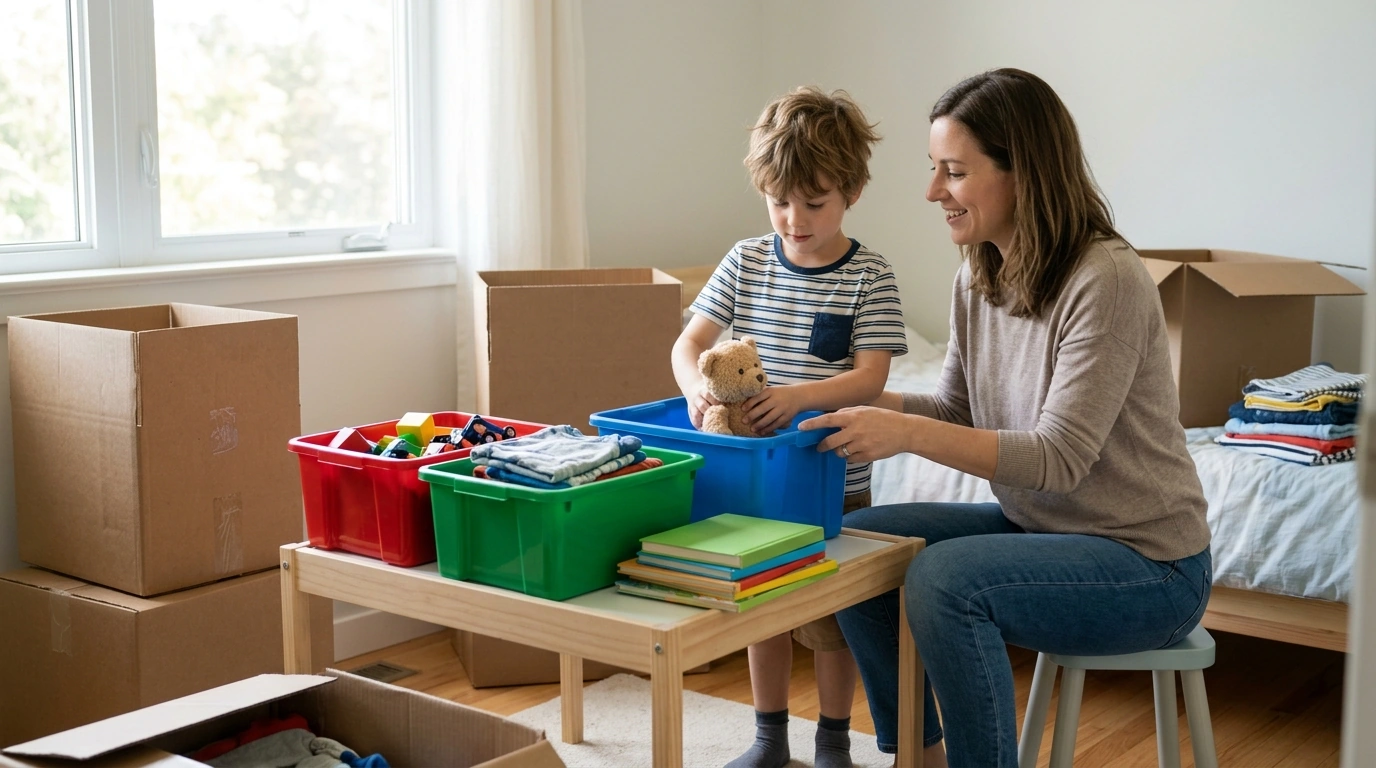
A kid-friendly packing plan keeps routines steady, gives children age-appropriate jobs, and makes sure their comfort items don’t get buried in a sea of boxes. Start by building a simple timeline: “keep,” “donate,” “pack,” and “open first.” Then make packing visible and predictable with a checklist kids can understand (stickers, colors, or a short daily goal).
Set up a “Kids First” packing zone
Choose one corner of a room for kid-related supplies: labels, markers, a small tote for “needs today,” and a rolling bin for “open first.” Keep this area consistent so kids know where their essentials will land. Use color-coded labels by child (blue for Sam, yellow for Maya) and add one clear instruction on every box: “OPEN FIRST,” “KITCHEN,” or “DO NOT PACK.”
Pack by routine, not by room
Kids feel moves most at bedtime, mealtime, and school mornings. Pack those routines last and unpack them first. Create one “first-night” box per child with pajamas, toothbrush, a comfort item, nightlight, and a couple of books. For school-age kids, make a backpack-only rule: chargers, headphones, a water bottle, and any must-have school items stay with them, not in the truck.
Give kids real jobs that won’t slow you down
Offer two to three controlled choices: “Do you want to pack your art supplies or your stuffed animals?” Let younger kids fill a small “treasure box” for the car ride, and let older kids inventory their own boxes on a note app. Keep breakables and paperwork off-limits, but invite kids to decorate labels or draw what’s inside—this speeds up unpacking later.
Plan for moving-day calm
Reserve a “quiet kit” (snacks, wipes, a small toy, and a download-ready tablet) and set expectations early: where they’ll be during loading, who’s in charge of them, and when the next meal happens. For a deeper step-by-step plan, visit this complete kid-friendly packing guide.
FAQ
What should I pack first when moving with kids?
Pack non-essential items first, like out-of-season clothes, extra toys, and décor. Keep daily routines intact by saving bedtime and school-morning essentials for last.














Leave a comment