Childproofing an Open-Plan Living Room & Kitchen: Top Steps
What are the most important childproofing steps for an open-plan living room and kitchen?
Open-plan spaces are great for family time, but they also remove the natural “barriers” that keep kids away from hazards. The safest approach is to create clear zones, secure high-risk items, and make the busiest pathways as clutter-free and stable as possible.
1) Create boundaries without blocking the flow
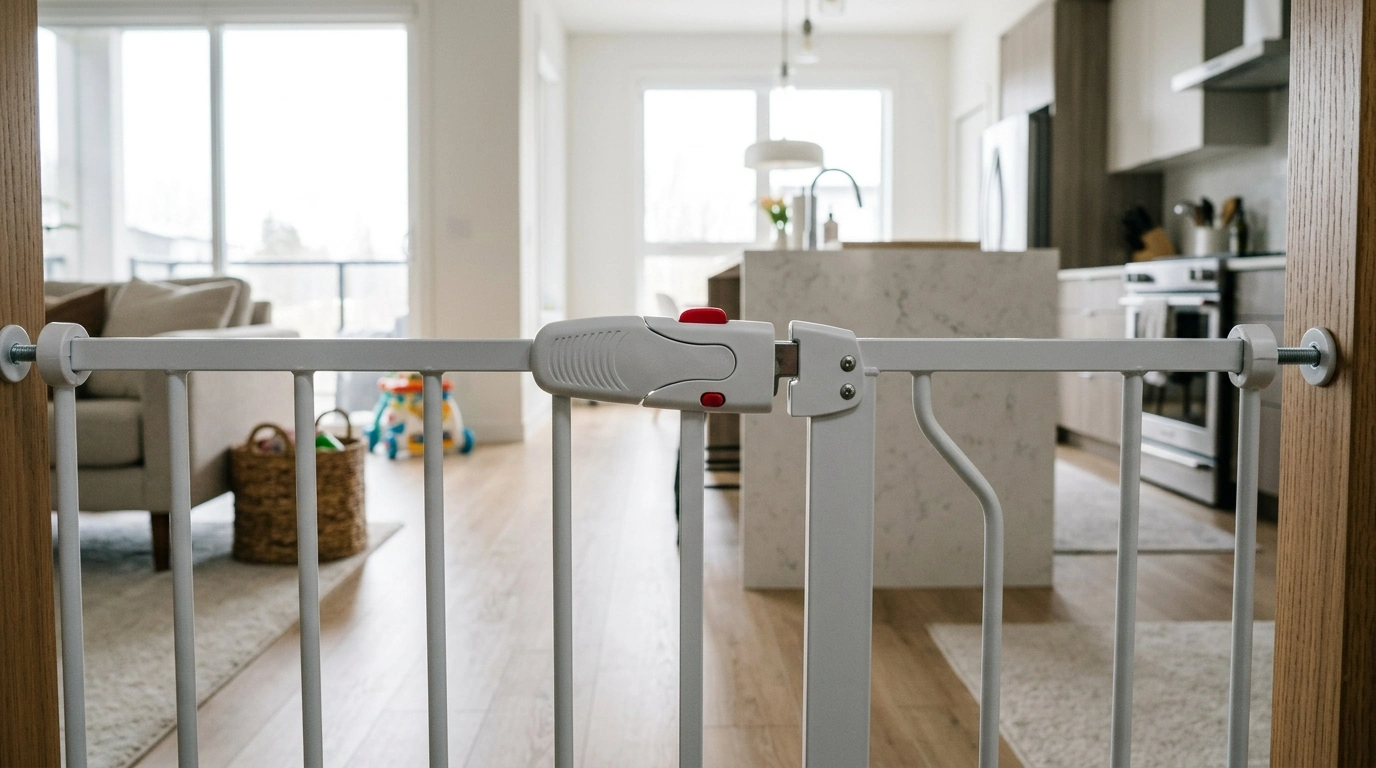
Use sturdy baby gates to control access to the kitchen during cooking and to keep toddlers away from stairs or hallways. In an open layout, consider a wide-span gate or play yard to establish a safe “yes” area in the living room where children can play within sight.
2) Lock down kitchen hazards first
Install childproof latches on lower cabinets and drawers that store cleaners, sharp tools, and small choking hazards. Add stove knob covers, use back burners when possible, and turn pot handles inward. If the oven door is within reach, add an oven lock and keep dishwashers latched to prevent access to detergents and knives.
3) Anchor furniture and secure TVs
In an open-plan room, kids often pull up on whatever is nearby. Anchor bookcases, consoles, and freestanding shelves to studs, and mount TVs or strap them to furniture. Secure heavy decor and avoid top-heavy storage in frequently used pathways.
4) Manage cords, outlets, and small items
Use outlet covers, cord shorteners, and cable channels to keep power cords out of reach—especially near the TV wall and kitchen counters. Store batteries, coins, magnets, and remote controls in closed containers so they don’t end up on the floor where crawling babies find them first.
5) Prevent slips, pinches, and bumps
Add non-slip pads under rugs, choose rugs with low profiles, and keep throw blankets off the floor. Use corner guards on sharp coffee-table edges and door pinch guards where fingers can get caught.
For a detailed checklist and room-by-room tips, see the full guide here: What are the most important childproofing steps for an open-plan living room and kitchen?
FAQ
How do I childproof a kitchen island with seating?
Use corner guards on edges, keep stools pushed in or removed when not in use, and store any small items off the countertop. If the island has cabinets, add latches to anything within reach.
















Leave a comment