Childproofing Latch & Gate Mistakes Parents Often Miss
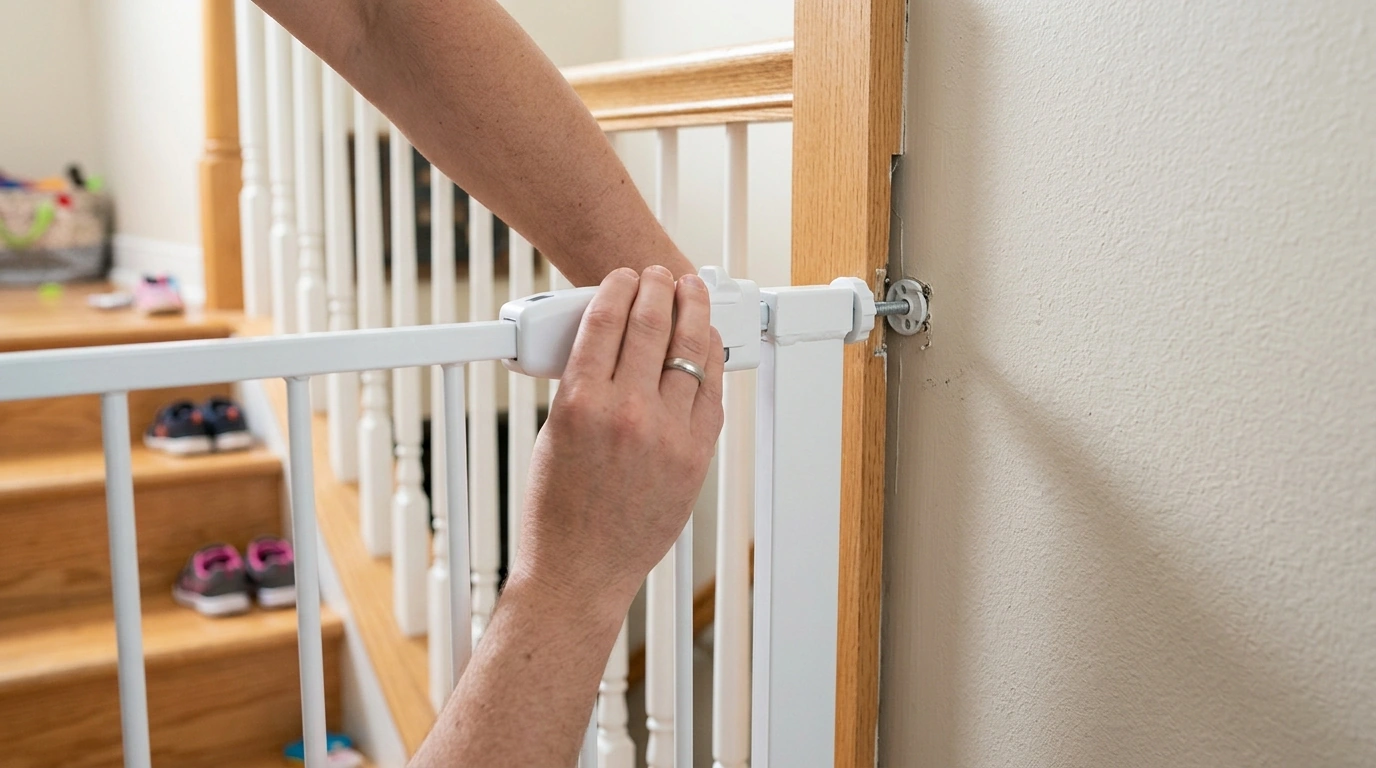
What are common childproofing mistakes parents make when installing safety latches and gates?
Most childproofing problems happen when a latch or gate is installed “close enough” instead of being installed for the exact way a child climbs, pulls, and tests boundaries. A device that works on day one can fail a month later once your child gets taller, stronger, and more curious.
Using the wrong gate for the location
A common mistake is placing a pressure-mounted gate at the top of stairs. These gates can shift under force, creating a fall risk. For stairways, a hardware-mounted gate that screws into a stud or solid blocking is the safer choice.
Mounting into weak surfaces
Anchoring gate hardware into drywall, thin trim, or soft wood can loosen over time. Install into studs when possible, use the correct anchors when you can’t, and avoid relying on decorative molding for structural support.
Skipping the “real-world” test
Parents often close a latch once and assume it’s secure. Test with one hand while carrying something, pull and shake the gate, and confirm it self-latches every time. If it only latches when perfectly aligned, it will eventually be left unlatched.
Leaving dangerous footholds and gaps
Gates installed near furniture can become climbing assists. Also check spacing: gaps at the hinge side, uneven floors, or a gate lifted too high can create head/limb entrapment hazards or allow a child to squeeze under.
Relying on adhesive latches or old, worn-out hardware
Stick-on latches can fail with humidity, cleaning products, or repeated yanking—especially on curved or textured surfaces. Likewise, secondhand gates with missing parts or recalled designs may not meet current safety standards.
Not adjusting as your child grows
What stops a crawler may not stop a determined toddler. Recheck installation monthly, tighten hardware, replace worn components, and reassess placement as your child learns to climb.
For a deeper walkthrough and setup tips, visit the full guide on childproofing mistakes with safety latches and gates.
FAQ
How often should I re-check child safety gates and latches?
Do a quick check weekly and a tighter inspection monthly: confirm screws are snug, the gate latches reliably, and nothing has shifted due to impact, humidity, or a growing child’s strength.
















Leave a comment